

Stump grinding Rome GA: costs, depth, and what nobody tells you about the aftermath
⏱️ 5 min read · Last updated: 2026
- Cost per stump: $75–$400 in the Rome GA area, with most single stumps landing in the $100–$200 range in 2026.
- Cost per inch of diameter: Many local crews charge $2–$5 per inch of stump diameter as a baseline pricing method.
- Grinder depth: Standard stump grinders cut 6–12 inches below the soil surface; 12 inches is typical for replanting clearance.
- What’s left behind: A pile of wood chips (equal to roughly two to three times the stump volume) and a depression that needs backfilling — neither disappears on its own.
- Pine stumps: Pine stumps in Rome GA commonly require 20–40% more grinding time than hardwood stumps of the same diameter due to dense, resin-saturated wood.
Stump grinding in Rome GA is the fastest, most affordable way to clear a cut tree from your yard — but the price gap between a pine stump and an oak stump surprises most homeowners, and few guides explain what the crew leaves behind. This page covers 2026 local pricing, why pine stumps cost more, how deep a grinder needs to go for your specific situation, and exactly what to do with the hole and chip pile after the crew packs up.
How stump grinding actually works
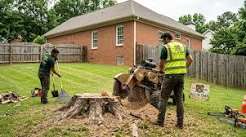
A stump grinder uses a rotating cutting wheel — typically 8–20 inches in diameter — lined with carbide teeth that chip wood into fragments as the operator sweeps the head side to side across the stump face. The machine does not pull the stump out or eliminate the root system. Instead, stump grinding reduces the visible stump and the top portion of the primary root mass to wood chips, leaving lateral roots in the ground untouched.
On a standard 18-inch stump, this process takes 15–30 passes. A large pine stump at 30 inches requires 45 minutes to over an hour of active grinding, depending on wood condition and machine power. Species like water oak and sweet gum — both common in Rome GA — can throw suckers (new sprouts) from remaining lateral roots for one to three seasons after grinding. Pine typically does not sucker, which is one practical advantage once stump grinding is complete. Understanding these species differences is the first step toward getting an accurate quote and realistic expectations before the crew arrives.

How much does stump grinding cost in Rome, GA?
With a clear picture of how the process works, the next question most homeowners ask is price. Stump grinding in Rome GA costs $75–$400 per stump for most residential jobs in 2026, with single-stump projects typically landing between $100 and $200. Local crews most commonly use the per-inch-of-diameter method — $2–$5 per inch — so a 20-inch stump runs $40–$100 by formula alone, with minimum job fees bringing most invoices to $100 or more regardless of size.
Several variables push the final price higher:
- Species: Pine and other resinous species add 20–40% to quoted prices due to tooth wear and extended grinding time.
- Access: Backyard stumps requiring hand-carried equipment through a narrow gate commonly add a flat surcharge of $25–$75.
- Root complexity: Wide-spreading surface roots require frequent grinder repositioning, adding time and cost.
- Stump age: Older, partially decayed stumps grind faster; fresh-cut pine stumps are denser and slower to process.
- Chip cleanup: Most crews leave the chip pile on-site. Hauling it away adds $50–$150 depending on volume.
Multiple stumps on the same property change the economics significantly. Most Rome GA crews offer a per-additional-stump rate of $40–$75 once the minimum job fee is covered — making it worth scheduling all stumps in one visit. According to tree care cost statistics Georgia data, stump grinding is consistently the most price-variable line item on tree service invoices, more so than trimming or removal.
Why pine stump removal is harder than you think in Rome GA
Of all the species-related cost factors, pine is the one that catches homeowners most off guard. Pine stump removal in Rome GA costs 20–40% more than grinding a hardwood stump of the same size because of resin. Longleaf, loblolly, and Virginia pine — all common in Floyd County — have wood saturated with resinous compounds that gum up carbide grinder teeth and generate significant friction heat during cutting.
To illustrate the difference: a 24-inch loblolly pine stump on Shorter Avenue took 58 minutes with a commercial grinder. A 26-inch red oak on the same property took 34 minutes — same crew, same machine, larger stump finished faster. Pine stumps sitting more than 12 months often develop a hardened outer layer as the resin oxidizes and crystallizes, dulling teeth on the first few passes before the grinder reaches softer interior wood.
One advantage pine has post-grinding: it doesn’t sucker. Once ground, no new growth emerges from the remaining root system. Oak, sweet gum, and cherry all produce sprouts from lateral roots — and in Rome GA’s warm, humid growing season, they will. That suckering behavior affects what you’ll deal with in the weeks after the crew leaves, which brings us to the aftermath.
What happens to the hole and chips after stump grinding?
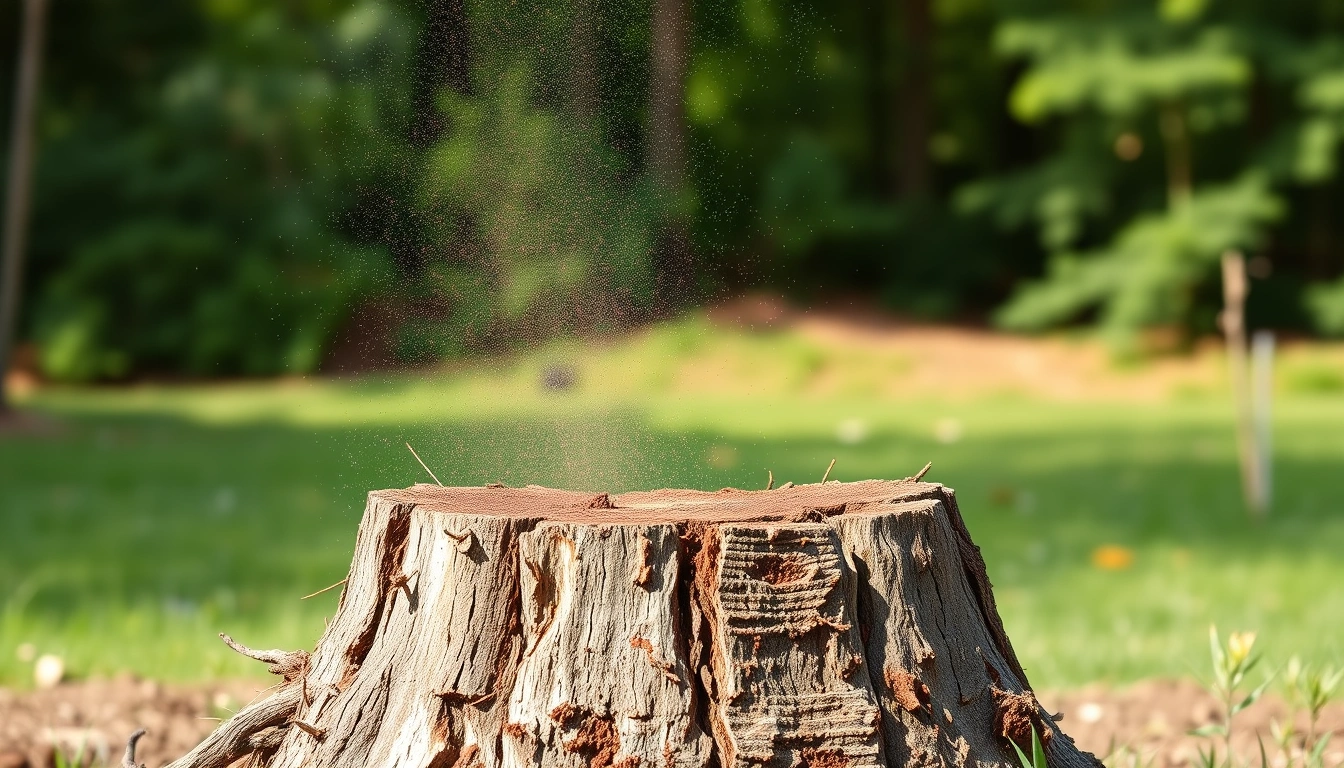
After stump grinding, you’re left with two things most guides overlook: a chip pile and a hole. The hole — typically 6–12 inches deep and as wide as the stump diameter — does not fill in cleanly on its own. The chip pile, commonly two to three times the volume of the original stump, does not disappear quickly either. How you handle both determines whether the site looks finished or becomes an ongoing eyesore.
The chip pile
Fresh chips from stump grinding are high in carbon and, when mixed directly into the planting hole, bind nitrogen in the surrounding soil as they decompose — a process called nitrogen immobilization. This matters if you plan to plant grass, a shrub, or a new tree at that spot. You have three practical options:
- Use as path or bed mulch: Spread 2–3 inches deep in garden beds away from the grinding site. Allow them to age 6–12 months before using near new plantings to avoid nitrogen competition at the root zone.
- Compost in place: Mix chips loosely back into the hole and expect settling over 6–18 months as decomposition occurs. Not ideal for replanting within a year.
- Have the crew haul them: This adds $50–$150 to most Rome GA stump grinding jobs but leaves the site immediately clean.
The hole
Once you’ve decided what to do with the chips, turn your attention to the depression left behind. To plant grass or sod over a stump grinding site, backfill with topsoil — not the chip mixture — and compact lightly before seeding. Rome GA’s clay-heavy subsoil compacts unpredictably, so blending in quality topsoil gives grass roots a better start than filling with pure clay. Expect slight settling over the first season and plan to top-dress once more after the site stabilizes.
Stump grinding vs. full stump removal: the honest comparison
Now that you understand both the process and the aftermath, you can make a more informed choice between the two main options. Stump grinding wins for nearly every residential situation in Rome GA. The exception is when you’re replanting a tree in the exact same spot or installing underground infrastructure directly through the root zone.
| Criteria | Stump grinding | Full stump removal | Winner for most homeowners |
|---|---|---|---|
| Cost | $75–$400 per stump | $150–$1,000+ per stump | Grinding |
| Time on site | 30 min – 2 hours | 2–6 hours (excavation required) | Grinding |
| Yard disruption | Small chip pile, shallow hole | Large excavation hole, significant soil disturbance | Grinding |
| Root system left behind | Lateral roots remain, decompose over years | Most roots extracted | Removal (if replanting in same spot) |
| Suckering risk | Possible on oaks, sweet gum, cherry | Greatly reduced | Removal (for sucker-prone species) |
| Equipment access needed | Moderate — grinder fits through 36-inch gate | High — excavator or heavy equipment required | Grinding |
| Sod/grass planting after | Yes, after backfilling with topsoil | Yes, after backfilling large hole | Tie |
| Replanting a tree same spot | Not recommended — old roots interfere | Yes, once site is prepared | Removal |
Choose stump grinding if you want the stump gone quickly at reasonable cost and plan to plant grass or clear a visual obstruction. Choose full removal if you’re replanting a tree in the exact same location, running underground infrastructure through the root zone, or dealing with a sucker-prone species. Either way, avoid scheduling near a septic system or buried utility lines without a locate first.
Pairing stump grinding with broader tree maintenance? Knowing the best time to trim trees Georgia helps you schedule both services in a single crew visit and reduce total job cost.
How deep should a stump grinder go?
Choosing between grinding and full removal often comes down to depth — and the right grinding depth depends entirely on what you plan to do with the space afterward. Standard stump grinder depth is 6–12 inches below the soil surface. Twelve inches is the minimum for planting grass or sod directly over the site. Going deeper than 12 inches rarely adds practical value for residential use and significantly increases cost.
Depth by intended use
- Lawn or sod: 10–12 inches, then backfill with topsoil before seeding.
- Garden bed or mulch area: 6–8 inches is sufficient; remaining roots decompose harmlessly under mulch.
- Concrete or pavers over the site: 12 inches minimum — decomposing wood creates voids under hardscape.
- New tree in the same spot: Full removal recommended; stump grinding depth alone doesn’t clear enough of the root system for healthy establishment.
One soil condition worth noting in the Rome GA area: older residential lots throughout Floyd County frequently contain embedded limestone and sandstone fragments that can slow a grinder or damage carbide teeth at depth. If your property sits on rocky ground, confirm with the crew upfront whether their equipment is suited for those conditions and whether a rock encounter affects the final price.
Three mistakes to avoid before calling a stump grinding crew
Even with a firm grasp on depth requirements and species pricing, a few avoidable missteps at booking time can turn a straightforward job into a costly one. Here are the three most common mistakes Rome GA homeowners make.
Scheduling stump grinding without checking for buried utilities is the most common — and most avoidable — mistake. Georgia 811 marks buried lines within three business days at no cost to the homeowner. Stump grinder teeth operating at 6–12 inches can contact a buried line, and liability falls on the property owner if no locate was requested beforehand.
Assuming the quote includes chip cleanup is the second mistake. Most Rome GA crews leave the wood chip pile on-site by default. Arriving home to a three-foot chip pile because you assumed removal was included is easily prevented — ask for that line item specifically before signing anything.
Comparing quotes without specifying the species is the third mistake. A bid of $125 on a “24-inch stump” versus $185 from another crew may simply reflect that one crew doesn’t know it’s a pine. Always specify the species in every quote. For guidance on how local crews structure full-service packages, the tree trimming Rome GA resource is a useful reference. If you’re budgeting for both trimming and stump grinding, the tree trimming cost Rome GA breakdown helps you negotiate a better combined rate rather than pricing each service separately.
- Stump grinding in Rome GA costs $75–$400 per stump in 2026; pine stumps cost 20–40% more than hardwood stumps of the same diameter.
- Standard stump grinder depth is 6–12 inches — target 10–12 inches for grass, 6–8 inches for mulch beds.
- Chip cleanup is almost never included in the base quote; budget an extra $50–$150 if you want the site cleared.
- Call Georgia 811 three business days before grinding to get utilities marked — it’s free and eliminates liability.
Common questions about stump grinding in Rome, GA
What does stump grinding cost in Rome, GA for a single average-sized stump?
Most single-stump grinding jobs in Rome GA fall between $100 and $200 in 2026. Crews typically price by diameter — $2–$5 per inch — with a minimum job fee of $75–$100. A 20-inch stump commonly lands around $100–$150 all-in, not including chip hauling, which adds $50–$150 if requested.
How does stump grinding work step by step?
A stump grinder positions a rotating carbide-toothed wheel against the stump face. The operator sweeps the cutting head side to side while incrementally lowering depth — typically in 2–3 inch passes — until reaching 6–12 inches below grade. The process leaves wood chips in and around the hole. Total time ranges from 20 minutes to 90 minutes depending on stump size and species.
Stump grinding vs. stump removal — which is better for most Rome GA homeowners?
Stump grinding is the better choice for the vast majority of residential situations — it costs $75–$400 versus $150–$1,000+ for full removal, takes a fraction of the time, and causes far less yard disruption. Full removal is only worth the extra cost if you’re replanting a tree in the exact same spot or eliminating a sucker-prone species at the root level.
Why do roots keep sprouting after stump grinding in my yard?
Stump grinding removes the stump and the top portion of the primary root mass but leaves lateral roots intact. Species like water oak, sweet gum, and cherry actively sucker from these remaining roots for one to three seasons. Pine stumps typically do not sucker after grinding. Repeated mowing of sprouts eventually depletes root energy; stump killer applied to fresh-cut sprouts accelerates this.
How much does it cost to grind a large pine stump in Rome, GA?
A large pine stump — 28–36 inches in diameter — typically costs $175–$400 to grind in Rome GA in 2026. Pine stumps run 20–40% higher than equivalent hardwood stumps due to resinous wood that wears grinder teeth faster and increases grinding time. Get a species-specific quote, not a generic per-inch estimate, for any pine over 24 inches.
What happens to the hole and chips after stump grinding?
After stump grinding, you’re left with a chip pile (roughly 2–3x the stump volume) and a depression 6–12 inches deep. Neither resolves automatically. Fresh wood chips deplete soil nitrogen as they decompose, so don’t mix them directly into a planting hole. Backfill the depression with topsoil before planting grass. Chip hauling is a separate cost: typically $50–$150.
How deep does stump grinding need to go for planting grass versus laying pavers?
For grass or sod, grind to 10–12 inches then backfill with topsoil before seeding. For garden beds and mulch areas, 6–8 inches is sufficient — remaining root material decomposes without issue under mulch. For concrete or pavers, 12 inches is the minimum; any remaining wood will decompose and create voids under hardscape over time.
See also: tree trimming rome ga
See also: tree care cost statistics georgia
See also: tree trimming cost rome ga
Related: crown reduction
Related: tree limb over house rome ga
Related: crepe murder
Related: The bottom line