
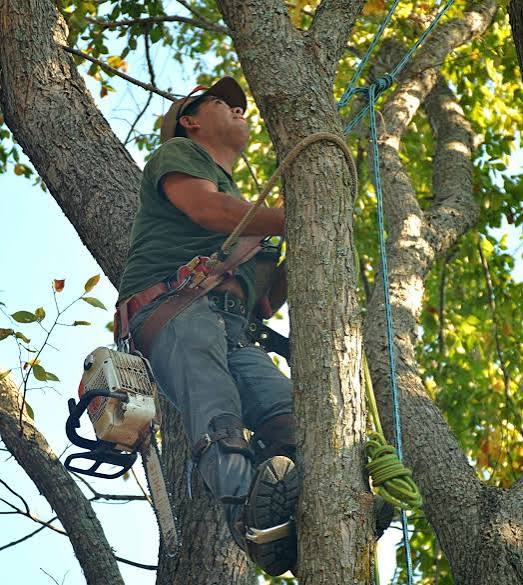

“`html
Tree cabling bracing Rome GA: when to save the tree and when to cut your losses
⏱️ 7 min read · Last updated: 2026
Tree cabling bracing Rome GA is one of the most cost-effective ways to extend the life of a structurally compromised tree — but only when the right conditions are in place. If you have a splitting oak or a codominant stem showing signs of separation, the core question is whether the underlying wood is still solid enough to hold hardware. When the wood is sound and decay is absent, tree cabling bracing Rome GA can add 10–20 years of safe, useful life for $300–$1,500. When decay has reached the heartwood or the split is already advanced, removal is usually the safer and less expensive long-term call.
- Typical cost: $300–$1,500 per tree for professional tree cabling bracing in Rome GA, depending on height, number of cables, and access difficulty.
- Inspection interval: ISA-certified arborists recommend re-inspecting a cabled tree every 1–2 years.
- Best candidates: Trees with codominant stems, a union angle wider than 30 degrees, and no visible decay or fungal conks at the junction.
- Storm timing: Georgia’s thunderstorm season runs from June–September, so completing tree cabling bracing Rome GA before that window reduces storm risk.
- Replacement timeline: Steel cabling systems commonly last 10–15 years before hardware replacement is needed.
How does tree cabling bracing Rome GA actually work?
Think of tree cabling bracing Rome GA as a seatbelt for a splitting tree. A high-strength cable connects two codominant stems near the top of the canopy, limiting how far they can pull apart under wind or ice load. Rather than propping the tree up, the cable sets a travel limit on separation so that dynamic storm forces are absorbed before they can split the union further. Bracing rods complement this system by acting as threaded steel pins that physically hold a cracked union from opening wider under the tree’s own weight.
Crucially, a cable does not prop a tree up. It redistributes stress into healthier wood, giving a structurally weak tree a fighting chance through a storm. A qualified arborist rome ga places the cable about two-thirds of the way between the union and the branch tips for the best leverage control.
The hardware usually includes eye bolts or J-lags anchored into sound wood, not bark or weak sapwood. When installed correctly, the system redistributes force and buys time for the tree to continue growing with less risk of sudden failure. Understanding this mechanical principle makes it easier to evaluate which trees are worth saving and which have already passed the point where hardware can help.
Can tree cabling bracing Rome GA save a splitting oak?

Yes, tree cabling bracing Rome GA can save a splitting oak when the crack is still limited, the union wood is sound, and decay has not reached the heartwood. A visible split is not an automatic death sentence if the tree still has enough structural strength to support hardware.
Oaks in Rome GA, especially willow oak, water oak, and Shumard oak, often develop included bark over 30–40 years of growth. Included bark forms a weak seam at codominant unions and is a major reason splits occur under lateral load. Because the weakness develops gradually and is often hidden from street level, many splits feel sudden even though the structural problem was building for decades.
A tree with included bark at its codominant stem union has a structurally weak joint by definition — tree cabling bracing reduces the risk of failure but does not eliminate it, which is why the one-to-two year re-inspection schedule is non-negotiable.
When caught early, tree cabling bracing Rome GA can buy 10–20 years of safer life, especially when paired with tree pruning rome ga to reduce crown weight. If the gap is wider than two inches or the exposed wood is discolored, tree removal rome ga is usually the safer choice. Cabling cannot reverse an advanced structural failure.
What is the difference between cabling and bracing?
Now that you understand how each system works individually, it helps to know how they differ in practice. Cabling handles dynamic load from wind and ice, while bracing supports a crack or split that is already opening under the tree’s own weight. Many Rome GA trees with split codominant stems need both cabling and bracing for full stabilization.
Tree cabling bracing Rome GA often uses both systems on the same tree when a codominant stem has begun to separate. Bracing rods become necessary when the split is active or the union is already separating by more than half an inch. Specific signs that bracing rods are needed alongside a cable include:
- The union shows an active crack or visible separation
- The stem gap opens when you apply light lateral pressure by hand
- A previous storm caused partial separation
For context on related service pricing, the tree trimming cost rome ga page gives a useful baseline for comparing quotes.

Which tree characteristics determine whether tree cabling bracing Rome GA will hold?
Knowing the difference between cabling and bracing is only useful if the tree is actually a good candidate for either. Tree cabling bracing Rome GA works best on trees with sound wood, a stable root system, and a union that is weak but not yet badly decayed. If a tree fails too many of the following structural checks, removal is the better option.
- Sound wood at the union: No soft spots, no hollow sound when tapped, and no visible discoloration
- Codominant stem angle: The two stems form an angle greater than 30 degrees
- No significant decay: No fungal conks, no weeping wounds, and no frass at the base of the union
- Adequate anchor wood: Each stem should generally be at least 8 inches in diameter to safely hold hardware
- Root system integrity: A tree with root rot or a lean of more than 15 degrees has a deeper structural issue
- Distance from structures: If a failure could strike a home or utility line, tree risk assessment rome ga may favor removal
Tree cabling bracing Rome GA versus removal: which is smarter?
Once you know whether your tree qualifies structurally, the next decision is whether saving it makes financial and safety sense compared to removal. Tree cabling bracing Rome GA is usually the better choice when the tree is still structurally sound enough to hold hardware and still has years of useful life left. Removal is smarter when the damage is too advanced or the failure zone threatens a structure directly.
| Criteria | Cabling & bracing | Tree removal | Better choice when… |
|---|---|---|---|
| Typical cost in Rome GA (2026) | $300–$1,500 | $500–$3,000+ | Cabling is cheaper if the tree qualifies |
| Best for active decay at union | No — hardware won’t hold in soft wood | Yes | Removal when decay is confirmed |
| Preserves tree and shade value | Yes, for years to decades | No | Cabling when tree has long remaining life |
| Ongoing maintenance required | Yes — inspection every 1–2 years | No (one-time event) | Removal if owner can’t commit to inspections |
| Tree near a structure | Risky — qualified assessment required | Often safer | Removal when failure zone directly targets home |
| Codominant stem with no decay | Ideal candidate | Unnecessary | Cabling — strongest use case |
| Tree already leaning >15 degrees | Does not address root/base failure | Yes | Removal — lean indicates deeper failure |
| Property value impact | Positive — mature trees add value | Neutral to negative short-term | Cabling when tree is large and healthy |
Choose tree cabling bracing if the tree has sound wood, a codominant stem with included bark but no active decay, and no direct strike path to an occupied structure. Choose removal if decay is confirmed, the lean exceeds 15 degrees, or the tree stands directly over a roof. Choose neither alone if the tree is partially split near a structure — emergency stabilization and a full tree risk assessment rome ga are the responsible next steps.
When should tree cabling bracing be installed in Rome GA?
Timing matters almost as much as technique. Late winter to early spring, especially February through April, is the best window for tree cabling bracing Rome GA. The tree is dormant, so drilling causes less stress and the leafless canopy is easier to inspect for hidden structural problems. Installing support before Georgia’s thunderstorm season, which runs June through September, also gives the system time to settle before peak storm risk arrives.
Emergency cabling after storm damage is also appropriate when a stem has split but not yet fully separated. In that situation, support should go in quickly rather than waiting for the ideal seasonal window. An emergency tree service rome ga team can install a temporary brace right away and follow up with a permanent cable system once conditions allow.
What goes wrong when tree cabling bracing Rome GA fails?
Even a correctly installed system can degrade over time, which is exactly why regular inspections are built into the maintenance schedule. Tree cabling bracing Rome GA fails in predictable ways, and each failure mode is far easier to catch during a routine visit than after a storm.
Hardware corrosion. Steel cables and eye bolts can show surface rust within three to five years in Rome GA’s humid climate. Surface oxidation is cosmetic, but pitting corrosion penetrates the metal and weakens the cable’s load capacity — making early detection during inspections critical. Synthetic cables resist corrosion entirely, which is one reason many arborists now prefer them for Rome GA installations.
The tree outgrows the attachment. As stems grow in diameter over 10–15 years, bark can engulf hardware that was correctly positioned at installation. Once hardware is buried, tension cannot be adjusted and the anchor point cannot be visually verified, so the system must be reset. Annual or biennial inspections catch this problem before the hardware disappears.
Cable tension changes. As stems grow, cable can become slack or too tight. Either condition creates problems — slack cable provides no restraint, while an overly tight cable can actually contribute to cracking at the anchor points. Adjusting tension during scheduled inspections prevents both extremes.
Decay worsens despite the cable. Tree cabling bracing Rome GA reduces dynamic load, but it does not stop decay already present in the union. A tree that looked borderline at installation can become unsafe within five to eight years if decay spreads unchecked. Regular tree trimming rome ga visits give arborists a consistent opportunity to probe the union and catch deterioration before it becomes an emergency.
The most common mistake in split tree repair is not choosing the wrong method. It is installing the right method and then never inspecting it again.
- Tree cabling bracing Rome GA costs $300–$1,500 and works best on codominant stems with sound wood and no active decay at the union.
- Cabling limits movement under storm load; it does not repair existing structural failure or stop decay already in progress.
- The one-to-two year re-inspection schedule is essential because cable tension shifts as the tree grows.
- When a tree is near a structure, leaning more than 15 degrees, or has confirmed decay, removal is usually the safer long-term choice.
Common questions about tree cabling bracing Rome GA
What is tree cabling and bracing in Rome, GA, and how is it different from other tree services?
Tree cabling installs high-strength steel or synthetic cable between two stems to limit storm-load movement. Bracing uses threaded steel rods to pin a cracked union closed. Together, they stabilize structurally weak trees without removal. Unlike pruning, which reduces weight, tree cabling bracing Rome GA redistributes dynamic stress across a wider section of the tree.
How do I get a splitting tree cabled in Rome, GA?
Contact an ISA-certified arborist rome ga for an on-site structural risk assessment. The arborist will probe the union for decay, measure the split gap, and evaluate root stability. This assessment typically takes 30–60 minutes and shows whether tree cabling bracing Rome GA, bracing, or removal is the right next step.
Cabling vs. removal — which is the right choice for a split tree in Rome, GA?
Choose cabling when the split is less than one inch wide, the wood at the union is sound, and the tree is not positioned to strike a structure on failure. Choose removal when there is confirmed decay, a lean exceeding 15 degrees, or when the tree is directly over a roof or occupied area.
Why do codominant stems split apart, and can you prevent it before it happens?
Codominant stems split because of included bark, which grows inward between the two stems instead of forming a strong wood weld. Preventive structural pruning during a tree’s first 15–20 years can train one stem to dominate and prevent the weak union from forming — reducing the need for tree cabling bracing Rome GA later.
How much does tree cabling cost in Rome, GA in 2026?
Tree cabling in Rome GA typically costs $300–$1,500 depending on tree height, the number of cable runs needed, access difficulty, and whether bracing rods are required. A single-cable installation on a medium-sized oak usually falls in the $400–$700 range. Re-inspection visits every one to two years add $100–$200 per visit.
How long does a tree cabling system last before it needs to be replaced?
Steel cabling systems commonly last 10–15 years before hardware replacement is needed, provided they are inspected every one to two years and tension is adjusted as the tree grows. Synthetic cable systems may last longer and resist corrosion better in Rome GA’s humid climate.
Does tree cabling and bracing require a permit in Rome, Georgia?
In Rome GA, tree cabling bracing typically does not require a separate permit, but local rules can vary. An ISA-certified arborist or your local tree service can confirm whether a permit is needed for the specific tree and site conditions before any tree cabling bracing Rome GA work begins.
See also: tree trimming rome ga
See also: tree trimming cost rome ga
See also: tree pruning rome ga
Related: The bottom line